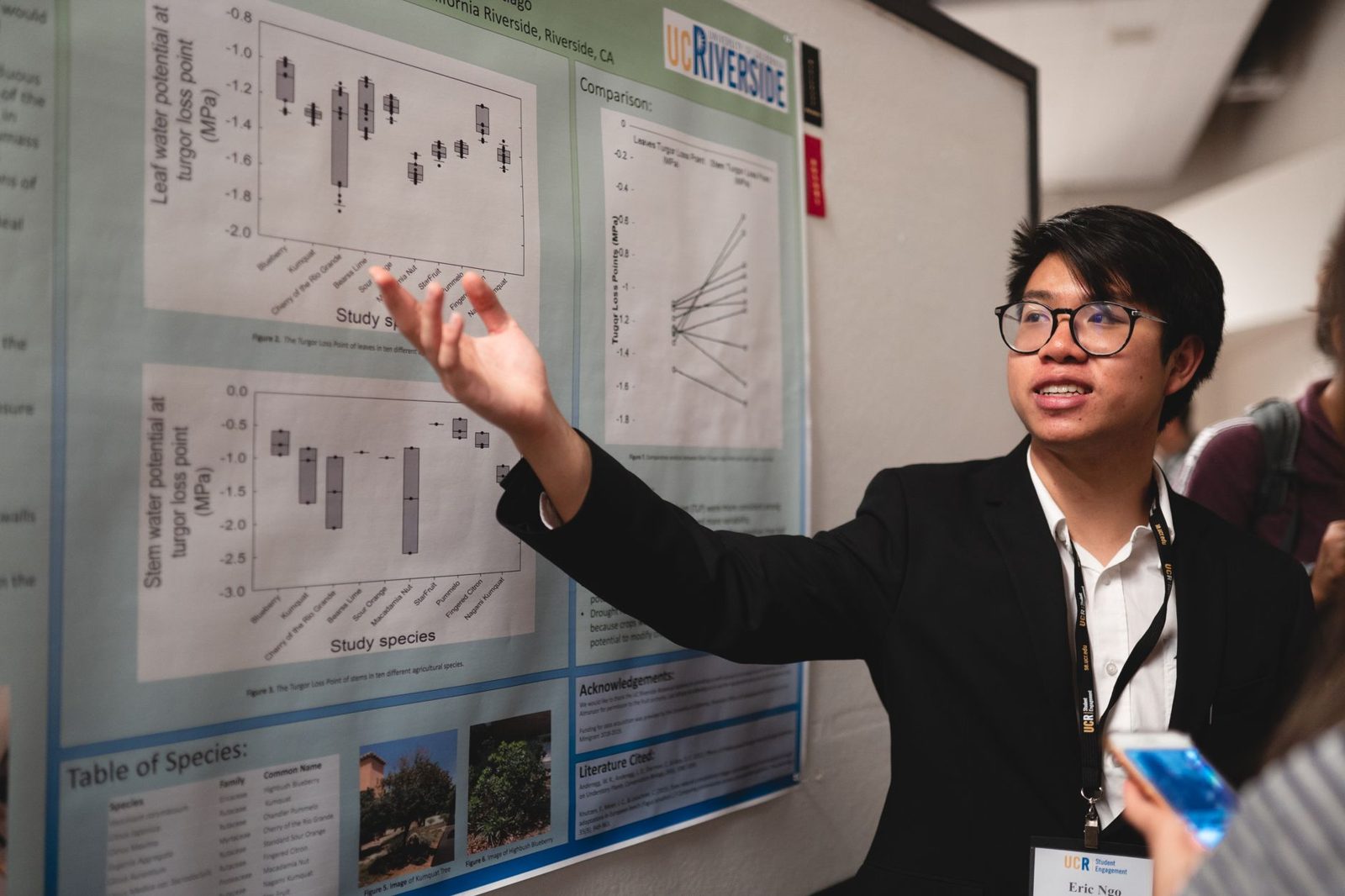
The Davidson Fellows Scholarship, run by the Davidson Institute, awards $100,000, $50,000 or $25,000 to students 18 or younger who have completed a significant piece of work in STEM, literature, music, philosophy or “Outside the Box.” It is open to U.S. citizens and permanent residents living in the United States. The 2027 Davidson Fellows deadline is February 17, 2027.
This profile uses the Davidson Institute’s Fellows Scholarship page and its Eligibility and Application page, checked in November 2026.
Who is eligible for the Davidson Fellows Scholarship
The Institute lists these requirements. Applicants must:
- “Be 18 or younger as of the application deadline to be eligible.” There is no grade requirement, so younger students can apply.
- Be U.S. citizens or permanent residents residing in the United States, or be stationed overseas on active U.S. military duty.
- Have completed a significant piece of work in one of the categories: Science, Technology, Engineering, Mathematics, Literature, Music, Philosophy, or Outside the Box.
- “Be able to demonstrate that the work is his or her own creation.”
- “Be able to attend an in-person event, with at least one parent or guardian.”
Teams of two may apply, but “both team members must meet eligibility requirements.”
What is not eligible
The sponsor rules out several kinds of work directly. These exclusions matter more than most applicants realise:
- “Community service projects are NOT eligible.”
- “Projects in the arts including photography, sculpture, film, visual, etc. are not eligible for consideration.”
- Literature reviews are not eligible.
- “Projects involving live vertebrates are not eligible.”
- “If you have no data, you are not eligible for consideration.”
What the award pays
Davidson Fellows receive scholarships of $100,000, $50,000 or $25,000. The Institute does not publish a fixed number of awards each year. It is a one-time award, not a renewable one.
Fellows are honoured at an awards reception and other recognition events in September in Washington, D.C., and the Institute provides travel and lodging. Applicants and a parent sign a statement of commitment to attend that reception if they are named a Fellow.
How selection works
Every applicant submits the required elements for their category, “two nominator forms and all of the Attachments.” Part two of the application includes a Supplemental Information prompt. Each category has its own list of required elements, posted on its category page.
📨 Get Free Scholarships Alerts
Free · No spam · Unsubscribe anytime
Independent professionals in the related field review the work and may consult other experts. The Institute names three criteria:
- “The scope and quality of the work submitted;”
- “The level of significance of the work submitted, as deemed by experts in the domain area (or a related domain area);”
- “The applicant’s depth of knowledge and understanding of the work and the related domain area.”
The Institute is plain about the level it expects: “This scholarship is not geared toward students at the novice level.” It does not publish an acceptance rate.
Deadlines and timeline
| Event | Date |
|---|---|
| 2027 application | Open now |
| Online information session | Thursday, November 12, 2026, 4 p.m. Pacific (registration required) |
| Application deadline | February 17, 2027 |
| Applicants notified | On or before July 15 |
| Awards reception | September, Washington, D.C. |
Because the age limit is measured “as of the application deadline,” a student who turns 19 before February 17, 2027 cannot use this cycle.
How to make a strong application
- Check your project against the exclusions first. A community service project, a visual arts portfolio, a literature review or work with no data will not be considered, however good it is.
- Read your category page line by line. The Institute warns that “applicants must follow the stated directions” and that “failure to follow directions may result in disqualification.” Make a checklist of every required element for your category.
- Choose nominators early. You need two, they must be different people, and “family members may NOT serve as nominators.” A mentor, teacher or professional who saw the work is the obvious choice.
- Write for an expert reader. Reviewers are professionals in your field judging significance and your depth of understanding. Explain where your work sits in the field and what it adds.
- Attend the information session. The November 12, 2026 session is the Institute’s own walkthrough. Questions can also go to [email protected].
For the Supplemental Information prompt, the advice in our scholarship essay guide on writing concretely about your own work applies.
Similar programs to consider
- The Regeneron Science Talent Search is the main option for seniors with original science research, with a top prize of $250,000.
- The VFW Voice of Democracy contest suits strong writers and speakers in grades 9 to 12.
- Our scholarship finder lists other competitions by field and deadline.
- Our guide on how to find scholarships covers local and field-specific awards to pair with a national competition.
Davidson Fellows FAQ
Can a middle school student apply?
Yes, if the work qualifies. The requirement is age (18 or younger as of the deadline), not grade.
Can two students apply together?
Yes. Teams of two are allowed, and both members must meet every eligibility requirement.
Can a parent be a nominator?
No. You need two different nominators, and family members may not serve.
When will I hear back?
The Institute notifies all applicants on or before July 15 each year.